
Welcome to ORVEX biomedical research.
Research Area: Antimicrobial & Immunology Research
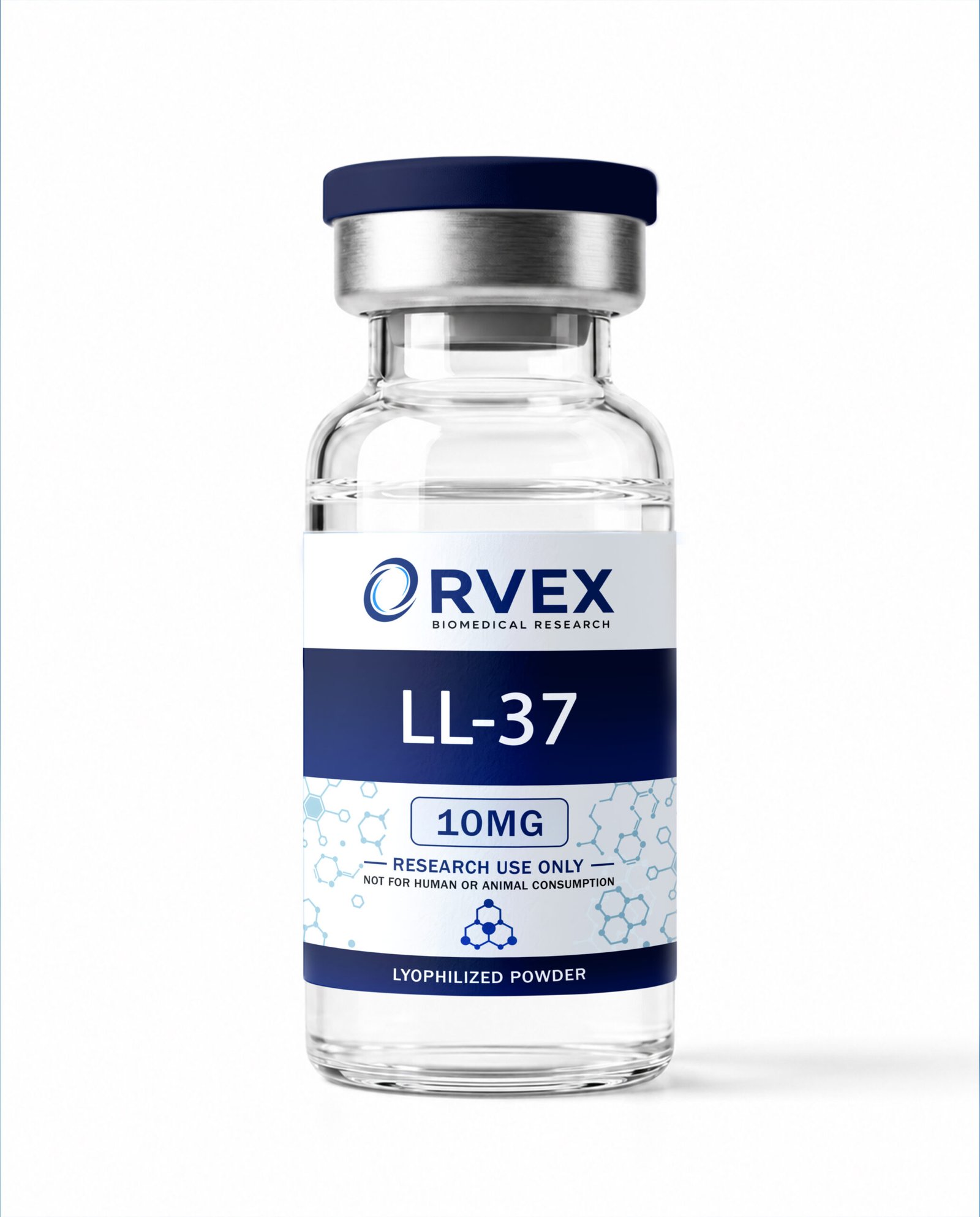
LL-37 is a 37-amino-acid human cathelicidin-derived peptide extensively studied in relation to antimicrobial activity, innate immune defense, immunomodulation, membrane interactions, and inflammatory signaling.
Supplied as a lyophilized powder for qualified laboratory research and intended exclusively for in vitro and analytical studies involving host-defense peptide biology, microbial membrane interactions, immune signaling, and cellular research.
Storage: Store according to validated laboratory and supplier specifications, protected from excessive heat, moisture, and direct light.
FOR RESEARCH USE ONLY. Not intended for human or veterinary use.
$75.00
Research Area: Antimicrobial & Immunology Research
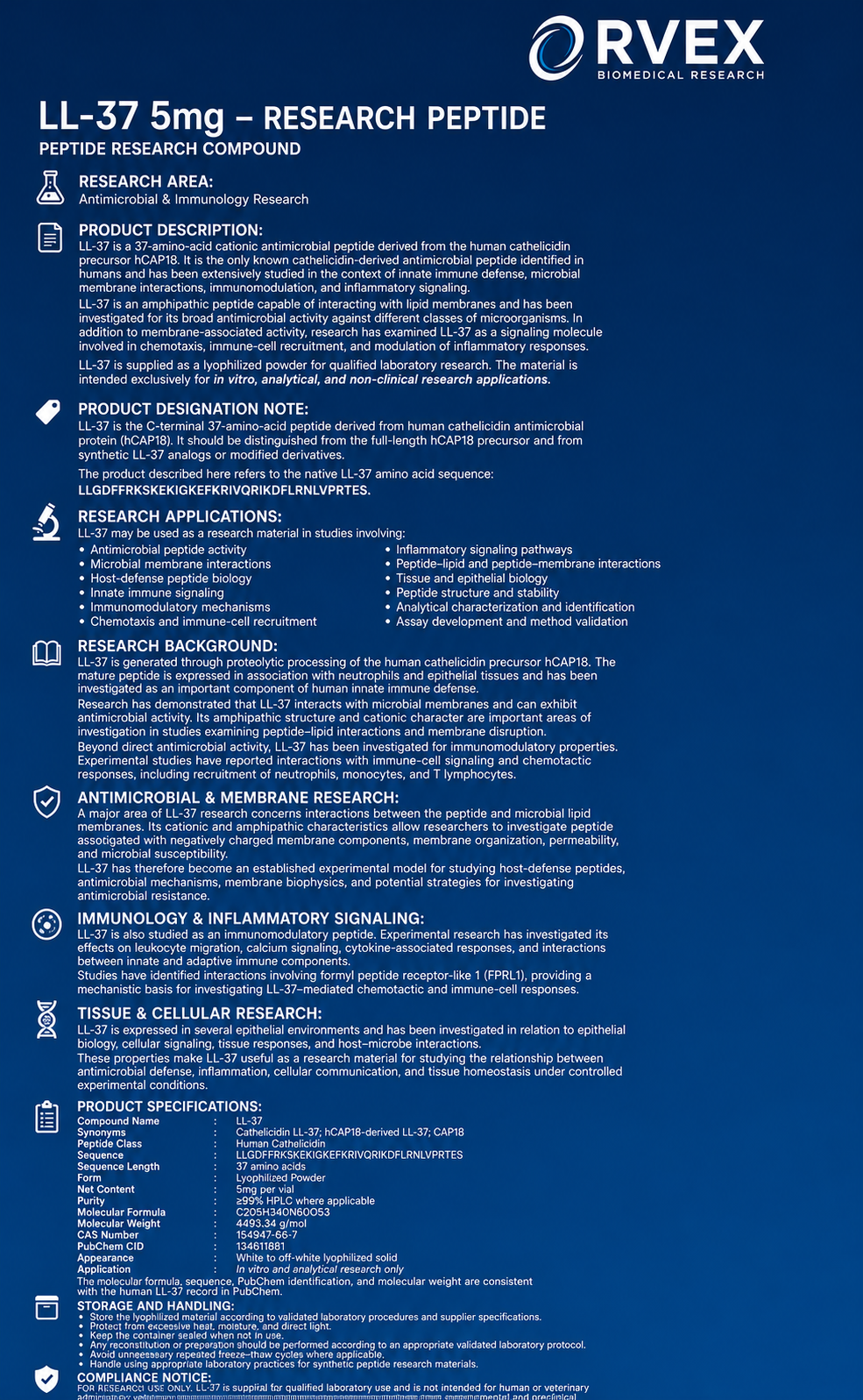
LL-37 is a 37-amino-acid cationic antimicrobial peptide derived from the human cathelicidin precursor hCAP18. It is the only known cathelicidin-derived antimicrobial peptide identified in humans and has been extensively studied in the context of innate immune defense, microbial membrane interactions, immunomodulation, and inflammatory signaling.
LL-37 is an amphipathic peptide capable of interacting with lipid membranes and has been investigated for its broad antimicrobial activity against different classes of microorganisms. In addition to membrane-associated activity, research has examined LL-37 as a signaling molecule involved in chemotaxis, immune-cell recruitment, and modulation of inflammatory responses.
LL-37 is supplied as a lyophilized powder for qualified laboratory research. The material is intended exclusively for in vitro, analytical, and non-clinical research applications.
LL-37 is the C-terminal 37-amino-acid peptide derived from human cathelicidin antimicrobial protein (hCAP18). It should be distinguished from the full-length hCAP18 precursor and from synthetic LL-37 analogs or modified derivatives.
The product described here refers to the native LL-37 amino acid sequence: LLGDFFRKSKEKIGKEFKRIVQRIKDFLRNLVPRTES.
LL-37 may be used as a research material in studies involving:
LL-37 is generated through proteolytic processing of the human cathelicidin precursor hCAP18. The mature peptide is expressed in association with neutrophils and epithelial tissues and has been investigated as an important component of human innate immune defense.
Research has demonstrated that LL-37 interacts with microbial membranes and can exhibit antimicrobial activity. Its amphipathic structure and cationic character are important areas of investigation in studies examining peptide–lipid interactions and membrane disruption.
Beyond direct antimicrobial activity, LL-37 has been investigated for immunomodulatory properties. Experimental studies have reported interactions with immune-cell signaling and chemotactic responses, including recruitment of neutrophils, monocytes, and T lymphocytes.
A major area of LL-37 research concerns interactions between the peptide and microbial lipid membranes. Its cationic and amphipathic characteristics allow researchers to investigate peptide association with negatively charged membrane components, membrane organization, permeability, and microbial susceptibility.
LL-37 has therefore become an established experimental model for studying host-defense peptides, antimicrobial mechanisms, membrane biophysics, and potential strategies for investigating antimicrobial resistance.
LL-37 is also studied as an immunomodulatory peptide. Experimental research has investigated its effects on leukocyte migration, calcium signaling, cytokine-associated responses, and interactions between innate and adaptive immune components.
Studies have identified interactions involving formyl peptide receptor-like 1 (FPRL1), providing a mechanistic basis for investigating LL-37-mediated chemotactic and immune-cell responses.
LL-37 is expressed in several epithelial environments and has been investigated in relation to epithelial biology, cellular signaling, tissue responses, and host–microbe interactions.
These properties make LL-37 useful as a research material for studying the relationship between antimicrobial defense, inflammation, cellular communication, and tissue homeostasis under controlled experimental conditions.
| Compound Name | LL-37 |
|---|---|
| Synonyms | Cathelicidin LL-37; hCAP18-derived LL-37; CAP18 |
| Peptide Class | Human Cathelicidin |
| Sequence | LLGDFFRKSKEKIGKEFKRIVQRIKDFLRNLVPRTES |
| Sequence Length | 37 amino acids |
| Form | Lyophilized Powder |
| Net Content | 10mg per vial |
| Purity | ≥99% HPLC where applicable |
| Molecular Formula | C205H340N60O53 |
| Molecular Weight | 4493.34 g/mol |
| CAS Number | 154947-66-7 |
| PubChem CID | 134611881 |
| Appearance | White to off-white lyophilized solid |
| Application | In vitro and analytical research only |
The molecular formula, sequence, PubChem identification, and molecular weight are consistent with the human LL-37 record in PubChem.
FOR RESEARCH USE ONLY.
LL-37 is supplied as a research material for qualified laboratory use and is not intended for human or veterinary administration. The biological activities described above represent findings from experimental and preclinical research and should not be interpreted as established therapeutic claims.
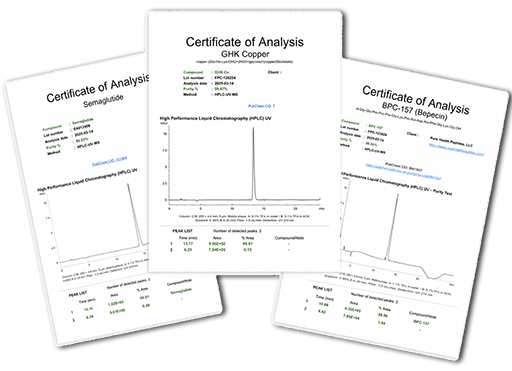
Orvexbio Research Transparency is essential. Every batch undergoes independent third-party testing in the USA, with Certificates of Analysis (COAs) readily available for verification, providing researchers with confidence in the quality and consistency of their work.
To provide the best experiences, we use technologies like cookies to store and/or access device information. Consenting to these technologies will allow us to process data such as browsing behavior or unique IDs on this site. Not consenting or withdrawing consent, may adversely affect certain features and functions.
Added to cart
Check out our shop to see what's available